
A vertical panel saw is only as good as the blade mounted on it. You can have the sturdiest frame, the most precise guide system and the most powerful motor in the industry — but fit the wrong blade and you'll get chipped edges, scorched surfaces, accelerated wear and, in the worst cases, a dangerous kickback. Choosing the correct vertical panel saw blades for the material you're cutting is the single most effective way to protect cut quality, extend blade life and keep your workshop running safely.

This guide walks you through how panel saw blades work, what to look for when cutting different materials, and how to tell when it's time for a replacement. Whether you're cutting plywood, MDF, acrylic or aluminium composite, the right blade makes all the difference.

How Vertical Panel Saw Blades Work
Before diving into material-specific recommendations, it helps to understand the anatomy of a saw blade. Three factors matter most when selecting a blade for your vertical panel saw:

Tooth count — The number of teeth on the blade. Fewer teeth remove material faster but leave a rougher finish. More teeth produce a cleaner cut but feed more slowly.
Hook angle (rake angle) — The angle of the tooth face relative to the blade centre. A positive hook angle bites aggressively into the material, which is ideal for wood. A zero or negative hook angle is less aggressive and prevents the blade from grabbing — essential for plastics and metals.
Kerf — The width of the cut the blade makes. A thinner kerf reduces waste and requires less power, while a thicker kerf produces a more stable cut in dense materials.
Most vertical panel saws use tungsten carbide-tipped (TCT) blades, where the steel body is fitted with hardened carbide cutting tips. TCT blades hold their edge far longer than high-speed steel (HSS) alternatives and can be resharpened multiple times, making them the standard choice for professional workshop use.

Blades for Cutting Wood: Plywood, MDF, Chipboard and Melamine
Wood and wood-based sheet materials are the most common materials processed on a vertical panel saw. The good news is that a quality TCT blade with a positive hook angle will handle most wood-based sheets — but tooth count and tooth geometry should be matched to the material for the best results.

Plywood and chipboard: A blade with 40 to 60 teeth is a solid all-round choice. Plywood has alternating grain layers that can splinter if the teeth are too aggressive, so a moderately high tooth count with a positive hook angle (around 10° to 15°) gives a clean cut without excessive feed resistance.

MDF: Because MDF is dense and fibrous, it tends to dull blades faster than natural timber. A blade with 60 to 80 teeth and a triple-chip grind (TCG) tooth pattern is recommended. TCG teeth alternate between a flat-top raker and a chamfered tooth, which helps clear fibres and reduces edge fraying. A blade for MDF panel saw use should also have a slightly negative to zero hook angle if you're after the cleanest possible edge on both sides of the cut.

Melamine-faced boards: Melamine coatings are notoriously prone to chipping on the underside of the cut. Use a blade with 80 or more teeth, a negative hook angle and a TCG grind. A scoring blade — if your saw is equipped with one — can also be used to pre-score the underside before the main blade passes through.

Blades for Cutting Acrylic and Plastics
Acrylic sheet (Perspex), polycarbonate and other rigid plastics require a fundamentally different blade to wood. The best blade for cutting acrylic has three key characteristics:

Fine tooth count — 80 to 100+ teeth. The more teeth, the smaller each individual cut, which minimises chipping and produces a smooth, polish-ready edge.
Zero or negative hook angle — A positive hook angle will grab and crack acrylic. A zero or slightly negative hook angle (0° to -5°) lets the teeth shave the material rather than gouge it.
Triple-chip or flat-top grind — These tooth patterns produce clean, chip-free edges in brittle plastics.
Using a standard wood blade on acrylic is one of the most common mistakes in a workshop. The aggressive positive hook angle will cause the blade to bite, crack or shatter the sheet — not only ruining the material but also creating a serious safety hazard. If you switch between wood and plastics regularly, keep a dedicated acrylic blade on hand and swap it over rather than trying to compromise with a single general-purpose blade.

Blades for Aluminium Composite (Dibond) and Non-Ferrous Metals
Aluminium composite materials — such as Dibond, Alupanel and Reynobond — consist of two thin aluminium skins bonded to a polyethylene core. They're widely used in signmaking, which makes up a significant portion of vertical panel saw work.

A standard wood blade will not cut aluminium composite safely. The teeth will load up with aluminium, the blade will bind, and the material will be damaged. Instead, you need a dedicated non-ferrous metal cutting blade with:

A negative hook angle (typically -5° to -10°) to prevent the blade from grabbing the metal.
A high tooth count (60 to 80 teeth) with a TCG grind to handle the aluminium skins cleanly.
Specialised carbide grade — Non-ferrous blades use a tougher carbide formulation designed to withstand the abrasiveness of aluminium without chipping.
The same type of blade is suitable for cutting solid aluminium sheet, brass, copper and other non-ferrous metals. Always apply a cutting lubricant or wax stick when cutting metals to prevent the material from sticking to the blade teeth, and feed the material steadily — forcing the cut will produce a rough edge and can damage the blade.

Blade Tooth Count Explained
Here's a quick reference for matching tooth count to material:

24–40 teeth — Fast, rough cuts in thick solid timber and rip cuts along the grain. Not suitable for sheet materials where edge quality matters.
40–60 teeth — General-purpose cuts in plywood, chipboard and softwood sheet. A good all-rounder for joinery work.
60–80 teeth — Clean cuts in MDF, hardwood plywood and melamine. Also the starting range for aluminium composite.
80–100+ teeth — Fine finishes in acrylic, polycarbonate, melamine-faced board and thin aluminium sheet. Produces the smoothest edges with minimal sanding required.
Rule of thumb: fewer teeth for thick materials and rip cuts; more teeth for thin sheet materials and fine finishes. When in doubt, choose the higher tooth count — the cut will be slower, but the finish will be cleaner and the risk of chipping is significantly reduced.

How to Tell When a Blade Needs Replacing
Even the best blade doesn't last forever. A dull blade doesn't just produce poor results — it forces the motor to work harder, generates excess heat, and increases the risk of kickback. Watch for these signs:

Burn marks on the cut edge — Scorching or darkened bands along the cut mean the blade is rubbing rather than cutting cleanly.
Rough or chipped edges — If cuts that used to be clean are now splintered or torn, the carbide tips are likely worn.
Slower cutting speed — When you find yourself having to push the material harder or feed more slowly to get through, the blade has lost its edge.
Increased noise or vibration — A blade that's dull or has damaged tips will cause the saw to vibrate more than usual and may produce a different pitch.
Visible damage to the tips — Inspect the blade regularly for chipped, broken or missing carbide teeth. Even one damaged tooth will affect cut quality.
Most quality TCT blades can be resharpened several times before they need replacing. If you notice any of the signs above, remove the blade and have it inspected by a sharpening specialist — it's often more economical to resharpen than to buy new, particularly for high-tooth-count blades.

Sagetech's Range and Blade Compatibility
All Sagetech vertical panel saws — the ZAPKUT ZM, KOOLKUT KF, KOOLKUT KK and TECHKUT ranges — are designed to accept standard Festool-compatible blades (TS 55 and TS 75 fitting). This means you have access to a wide range of off-the-shelf TCT blades from major manufacturers, and you're not locked into a proprietary blade system.

Sagetech supplies blades as part of machine packages and as standalone add-ons. Whether you're cutting plywood, MDF, acrylic or aluminium composite, we can advise on the correct blade specification for your specific saw and the materials you process most often. Blades, saw blades and dust extractors can all be included in a package or purchased separately as your needs evolve.

If you're unsure which blade is right for your saw or your materials, we're happy to talk you through the options — just give us a call.

Need Help Choosing the Right Blade?
If you're selecting a blade for a specific material, considering a new vertical panel saw, or simply want advice on getting the best cut quality from your existing machine, we're here to help. You can request a quote, book a demo, or call us on 0191 691 3044 and we'll be glad to talk you through it.Blog
Vertical Panel Saw Blades: A Complete Guide to Choosing the Right Blade
A vertical panel saw is only as good as the blade mounted on it. You can have the sturdiest frame, the most precise guide system and the most powerful motor in the industry — but fit the wrong blade and you'll get chipped edges, scorched surfaces, accelerated wear and, in the worst cases, a dangerous kickback. Choosing the correct vertical panel saw blades for the material you're cutting is the single most effective way to protect cut quality, extend blade life and keep your workshop running safely.

This guide walks you through how panel saw blades work, what to look for when cutting different materials, and how to tell when it's time for a replacement. Whether you're cutting plywood, MDF, acrylic or aluminium composite, the right blade makes all the difference.

How Vertical Panel Saw Blades Work
Before diving into material-specific recommendations, it helps to understand the anatomy of a saw blade. Three factors matter most when selecting a blade for your vertical panel saw:

Tooth count — The number of teeth on the blade. Fewer teeth remove material faster but leave a rougher finish. More teeth produce a cleaner cut but feed more slowly.
Hook angle (rake angle) — The angle of the tooth face relative to the blade centre. A positive hook angle bites aggressively into the material, which is ideal for wood. A zero or negative hook angle is less aggressive and prevents the blade from grabbing — essential for plastics and metals.
Kerf — The width of the cut the blade makes. A thinner kerf reduces waste and requires less power, while a thicker kerf produces a more stable cut in dense materials.
Most vertical panel saws use tungsten carbide-tipped (TCT) blades, where the steel body is fitted with hardened carbide cutting tips. TCT blades hold their edge far longer than high-speed steel (HSS) alternatives and can be resharpened multiple times, making them the standard choice for professional workshop use.

Blades for Cutting Wood: Plywood, MDF, Chipboard and Melamine
Wood and wood-based sheet materials are the most common materials processed on a vertical panel saw. The good news is that a quality TCT blade with a positive hook angle will handle most wood-based sheets — but tooth count and tooth geometry should be matched to the material for the best results.

Plywood and chipboard: A blade with 40 to 60 teeth is a solid all-round choice. Plywood has alternating grain layers that can splinter if the teeth are too aggressive, so a moderately high tooth count with a positive hook angle (around 10° to 15°) gives a clean cut without excessive feed resistance.

MDF: Because MDF is dense and fibrous, it tends to dull blades faster than natural timber. A blade with 60 to 80 teeth and a triple-chip grind (TCG) tooth pattern is recommended. TCG teeth alternate between a flat-top raker and a chamfered tooth, which helps clear fibres and reduces edge fraying. A blade for MDF panel saw use should also have a slightly negative to zero hook angle if you're after the cleanest possible edge on both sides of the cut.

Melamine-faced boards: Melamine coatings are notoriously prone to chipping on the underside of the cut. Use a blade with 80 or more teeth, a negative hook angle and a TCG grind. A scoring blade — if your saw is equipped with one — can also be used to pre-score the underside before the main blade passes through.

Blades for Cutting Acrylic and Plastics
Acrylic sheet (Perspex), polycarbonate and other rigid plastics require a fundamentally different blade to wood. The best blade for cutting acrylic has three key characteristics:

Fine tooth count — 80 to 100+ teeth. The more teeth, the smaller each individual cut, which minimises chipping and produces a smooth, polish-ready edge.
Zero or negative hook angle — A positive hook angle will grab and crack acrylic. A zero or slightly negative hook angle (0° to -5°) lets the teeth shave the material rather than gouge it.
Triple-chip or flat-top grind — These tooth patterns produce clean, chip-free edges in brittle plastics.
Using a standard wood blade on acrylic is one of the most common mistakes in a workshop. The aggressive positive hook angle will cause the blade to bite, crack or shatter the sheet — not only ruining the material but also creating a serious safety hazard. If you switch between wood and plastics regularly, keep a dedicated acrylic blade on hand and swap it over rather than trying to compromise with a single general-purpose blade.

Blades for Aluminium Composite (Dibond) and Non-Ferrous Metals
Aluminium composite materials — such as Dibond, Alupanel and Reynobond — consist of two thin aluminium skins bonded to a polyethylene core. They're widely used in signmaking, which makes up a significant portion of vertical panel saw work.

A standard wood blade will not cut aluminium composite safely. The teeth will load up with aluminium, the blade will bind, and the material will be damaged. Instead, you need a dedicated non-ferrous metal cutting blade with:

A negative hook angle (typically -5° to -10°) to prevent the blade from grabbing the metal.
A high tooth count (60 to 80 teeth) with a TCG grind to handle the aluminium skins cleanly.
Specialised carbide grade — Non-ferrous blades use a tougher carbide formulation designed to withstand the abrasiveness of aluminium without chipping.
The same type of blade is suitable for cutting solid aluminium sheet, brass, copper and other non-ferrous metals. Always apply a cutting lubricant or wax stick when cutting metals to prevent the material from sticking to the blade teeth, and feed the material steadily — forcing the cut will produce a rough edge and can damage the blade.

Blade Tooth Count Explained
Here's a quick reference for matching tooth count to material:

24–40 teeth — Fast, rough cuts in thick solid timber and rip cuts along the grain. Not suitable for sheet materials where edge quality matters.
40–60 teeth — General-purpose cuts in plywood, chipboard and softwood sheet. A good all-rounder for joinery work.
60–80 teeth — Clean cuts in MDF, hardwood plywood and melamine. Also the starting range for aluminium composite.
80–100+ teeth — Fine finishes in acrylic, polycarbonate, melamine-faced board and thin aluminium sheet. Produces the smoothest edges with minimal sanding required.
Rule of thumb: fewer teeth for thick materials and rip cuts; more teeth for thin sheet materials and fine finishes. When in doubt, choose the higher tooth count — the cut will be slower, but the finish will be cleaner and the risk of chipping is significantly reduced.

How to Tell When a Blade Needs Replacing
Even the best blade doesn't last forever. A dull blade doesn't just produce poor results — it forces the motor to work harder, generates excess heat, and increases the risk of kickback. Watch for these signs:

Burn marks on the cut edge — Scorching or darkened bands along the cut mean the blade is rubbing rather than cutting cleanly.
Rough or chipped edges — If cuts that used to be clean are now splintered or torn, the carbide tips are likely worn.
Slower cutting speed — When you find yourself having to push the material harder or feed more slowly to get through, the blade has lost its edge.
Increased noise or vibration — A blade that's dull or has damaged tips will cause the saw to vibrate more than usual and may produce a different pitch.
Visible damage to the tips — Inspect the blade regularly for chipped, broken or missing carbide teeth. Even one damaged tooth will affect cut quality.
Most quality TCT blades can be resharpened several times before they need replacing. If you notice any of the signs above, remove the blade and have it inspected by a sharpening specialist — it's often more economical to resharpen than to buy new, particularly for high-tooth-count blades.

Sagetech's Range and Blade Compatibility
All Sagetech vertical panel saws — the ZAPKUT ZM, KOOLKUT KF, KOOLKUT KK and TECHKUT ranges — are designed to accept standard Festool-compatible blades (TS 55 and TS 75 fitting). This means you have access to a wide range of off-the-shelf TCT blades from major manufacturers, and you're not locked into a proprietary blade system.

Sagetech supplies blades as part of machine packages and as standalone add-ons. Whether you're cutting plywood, MDF, acrylic or aluminium composite, we can advise on the correct blade specification for your specific saw and the materials you process most often. Blades, saw blades and dust extractors can all be included in a package or purchased separately as your needs evolve.

If you're unsure which blade is right for your saw or your materials, we're happy to talk you through the options — just give us a call.

Need Help Choosing the Right Blade?
If you're selecting a blade for a specific material, considering a new vertical panel saw, or simply want advice on getting the best cut quality from your existing machine, we're here to help. You can request a quote, book a demo, or call us on 0191 367 0267 and we'll be glad to talk you through it.
Why Your Workshop Needs a Vertical Panel Saw: A Game-Changing Investment
In 2025’s evolving UK manufacturing landscape, workshops and businesses are seeking smart investment options that balance quality with cost-effectiveness. Here’s why an approved used vertical panel saw could be your workshop’s next strategic investment.
Market Context Matters
With Sagetech Machinery high commanding % of the UK vertical panel saw market, the used machinery market offers compelling opportunities. As Sagetech focuses on expanding their approved used program through 2025-2026, buyers have access to quality-assured machines at attractive price points.
Financial Advantages
Approved used machines offer substantial initial cost savings, faster return on investment, lower depreciation risk, more competitive pricing against market leaders, and better cash flow management for growing businesses.Average costs ranging from £1000-£4000.
Quality Assurance in the Secondary Market
When choosing an approved used vertical panel saw, you benefit from professional inspection and certification, verified service history, performance testing, compliance with current UK safety standards, and manufacturer-backed assurance.
Why Choose Approved Used in 2025?
1. Market Maturity
The UK vertical panel saw market is well-established, with reliable machines from THE reputable manufacturer Sagetech Machinery.
2. Economic Sense
Lower capital investment required, immediate productivity gains, proven performance records, access to professional support networks, and original parts availability.
3. Business Flexibility
Easier entry into professional cutting capabilities, lower financial risk, opportunity to upgrade as business grows, and immediate access to professional-grade equipment.
Making an Informed Choice
Consider these factors when evaluating approved used options:
Production Requirements:
– ZAPKUT ZM: Ideal for up to 40 sheets weekly
– KOOLKUT KF: Suitable for up to 100 sheets weekly
– KOOLKUT KK: Perfect for 150+ sheets weekly
– TECHKUT: Industrial-grade requirements
Technical Considerations:
Cutting capacity needs, space availability, power requirements, material versatility requirements, and future growth projections.
Support Network
When buying approved used machinery, ensure you have access to technical support, spare parts supply, professional maintenance, operator training, and upgrade pathways.
Market Position
With Sagetech Machinery’s strong market share in the UK, choosing their approved used equipment means reliable after-sales support, established service network, proven market acceptance, strong resale value, and continued manufacturer backing.
Getting Started
To explore approved used vertical panel saw options, contact Sagetech Machinery:
Location: County Durham, UK
Phone: +44 (0)191 367 0267
Email: hello@sagetechmachinery.co.uk
Website: www.verticalpanelsaw.co.uk
Business Hours: Monday to Friday, 8:30 AM – 5:00 PM
Expert Support Available:
Machine assessment, site surveys, installation planning, training programs, and ongoing technical support.
Conclusion
In 2025’s competitive UK market, approved used vertical panel saws represent a pragmatic investment choice. With established manufacturers like Sagetech Machinery expanding their approved used programs, businesses can access professional-grade cutting technology without the premium price tag of new equipment. The combination of lower initial investment, manufacturer backing, and proven performance makes approved used vertical panel saws an increasingly attractive option for UK workshops looking to enhance their cutting capabilities.

Why Approved Used Vertical Panel Saws Are a Smart Choice in Today’s UK Market
In 2025’s evolving UK manufacturing landscape, workshops and businesses are seeking smart investment options that balance quality with cost-effectiveness. Here’s why an approved used vertical panel saw could be your workshop’s next strategic investment.
Market Context Matters
With Sagetech Machinery high commanding % of the UK vertical panel saw market, the used machinery market offers compelling opportunities. As Sagetech focuses on expanding their approved used program through 2025-2026, buyers have access to quality-assured machines at attractive price points.
Financial Advantages
Approved used machines offer substantial initial cost savings, faster return on investment, lower depreciation risk, more competitive pricing against market leaders, and better cash flow management for growing businesses.Average costs ranging from £1000-£4000.
Quality Assurance in the Secondary Market
When choosing an approved used vertical panel saw, you benefit from professional inspection and certification, verified service history, performance testing, compliance with current UK safety standards, and manufacturer-backed assurance.
Why Choose Approved Used in 2025?
1. Market Maturity
The UK vertical panel saw market is well-established, with reliable machines from THE reputable manufacturer Sagetech Machinery.
2. Economic Sense
Lower capital investment required, immediate productivity gains, proven performance records, access to professional support networks, and original parts availability.
3. Business Flexibility
Easier entry into professional cutting capabilities, lower financial risk, opportunity to upgrade as business grows, and immediate access to professional-grade equipment.
Making an Informed Choice
Consider these factors when evaluating approved used options:
Production Requirements:
– ZAPKUT ZM: Ideal for up to 40 sheets weekly
– KOOLKUT KF: Suitable for up to 100 sheets weekly
– KOOLKUT KK: Perfect for 150+ sheets weekly
– TECHKUT: Industrial-grade requirements
Technical Considerations:
Cutting capacity needs, space availability, power requirements, material versatility requirements, and future growth projections.
Support Network
When buying approved used machinery, ensure you have access to technical support, spare parts supply, professional maintenance, operator training, and upgrade pathways.
Market Position
With Sagetech Machinery’s strong market share in the UK, choosing their approved used equipment means reliable after-sales support, established service network, proven market acceptance, strong resale value, and continued manufacturer backing.
Getting Started
To explore approved used vertical panel saw options, contact Sagetech Machinery:
Location: County Durham, UK
Phone: +44 (0)191 367 0267
Email: hello@sagetechmachinery.co.uk
Website: www.verticalpanelsaw.co.uk
Business Hours: Monday to Friday, 8:30 AM – 5:00 PM
Expert Support Available:
Machine assessment, site surveys, installation planning, training programs, and ongoing technical support.
Conclusion
In 2025’s competitive UK market, approved used vertical panel saws represent a pragmatic investment choice. With established manufacturers like Sagetech Machinery expanding their approved used programs, businesses can access professional-grade cutting technology without the premium price tag of new equipment. The combination of lower initial investment, manufacturer backing, and proven performance makes approved used vertical panel saws an increasingly attractive option for UK workshops looking to enhance their cutting capabilities.

Maximize Your Workshop Efficiency with Sagetech Machinery’s Vertical Panel Saws
In 2025’s evolving UK manufacturing landscape, workshops and businesses are seeking smart investment options that balance quality with cost-effectiveness. Here’s why an approved used vertical panel saw could be your workshop’s next strategic investment.
Market Context Matters
With Sagetech Machinery high commanding % of the UK vertical panel saw market, the used machinery market offers compelling opportunities. As Sagetech focuses on expanding their approved used program through 2025-2026, buyers have access to quality-assured machines at attractive price points.
Financial Advantages
Approved used machines offer substantial initial cost savings, faster return on investment, lower depreciation risk, more competitive pricing against market leaders, and better cash flow management for growing businesses.Average costs ranging from £1000-£4000.
Quality Assurance in the Secondary Market
When choosing an approved used vertical panel saw, you benefit from professional inspection and certification, verified service history, performance testing, compliance with current UK safety standards, and manufacturer-backed assurance.
Why Choose Approved Used in 2025?
1. Market Maturity
The UK vertical panel saw market is well-established, with reliable machines from THE reputable manufacturer Sagetech Machinery.
2. Economic Sense
Lower capital investment required, immediate productivity gains, proven performance records, access to professional support networks, and original parts availability.
3. Business Flexibility
Easier entry into professional cutting capabilities, lower financial risk, opportunity to upgrade as business grows, and immediate access to professional-grade equipment.
Making an Informed Choice
Consider these factors when evaluating approved used options:
Production Requirements:
– ZAPKUT ZM: Ideal for up to 40 sheets weekly
– KOOLKUT KF: Suitable for up to 100 sheets weekly
– KOOLKUT KK: Perfect for 150+ sheets weekly
– TECHKUT: Industrial-grade requirements
Technical Considerations:
Cutting capacity needs, space availability, power requirements, material versatility requirements, and future growth projections.
Support Network
When buying approved used machinery, ensure you have access to technical support, spare parts supply, professional maintenance, operator training, and upgrade pathways.
Market Position
With Sagetech Machinery’s strong market share in the UK, choosing their approved used equipment means reliable after-sales support, established service network, proven market acceptance, strong resale value, and continued manufacturer backing.
Getting Started
To explore approved used vertical panel saw options, contact Sagetech Machinery:
Location: County Durham, UK
Phone: +44 (0)191 367 0267
Email: hello@sagetechmachinery.co.uk
Website: www.verticalpanelsaw.co.uk
Business Hours: Monday to Friday, 8:30 AM – 5:00 PM
Expert Support Available:
Machine assessment, site surveys, installation planning, training programs, and ongoing technical support.
Conclusion
In 2025’s competitive UK market, approved used vertical panel saws represent a pragmatic investment choice. With established manufacturers like Sagetech Machinery expanding their approved used programs, businesses can access professional-grade cutting technology without the premium price tag of new equipment. The combination of lower initial investment, manufacturer backing, and proven performance makes approved used vertical panel saws an increasingly attractive option for UK workshops looking to enhance their cutting capabilities.
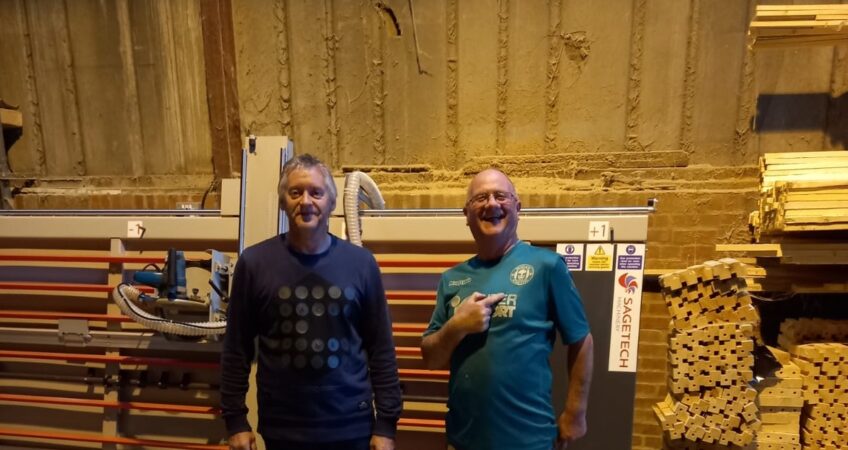
No sleepless nights with a Sagetech Vertical Panel Saw
Company Name: GB Bedding Astley
What do you do?
G & B Bedding. Bed manufacturers in Manchester, with our factory showroom in the heart of Astley. We make mattresses and divans in our own factory. Plus, we supply a range of bedframes and headboards from quality suppliers.
Where did you hear about Sagetech Machinery?
We came across Sagetech Machinery on the internet
Why did you decide to purchase a Vertical Panel Saw?
My old saw had been great, we had it for many years. Its had a range of problems which we had sorted but it was time to replace the saw with a new one

How did you find the sales and installation process?
Mark was great in helping us pick a machine for us. He talked us through the options, showed us the machine and also the Youtube videos of it in action. The guys dropped the machine off one day and the engineer turned up another to then get the installation done and then train our team! All done without any problems
How has a Vertical Saw benefited you and your business ?
The new saw is great, its a lot more accurate than our old saw and more importantly just works when we need it to work! The machine looks great and is really sturdy – the new saw gives me the confidence our work wont get delayed by the old machine break downs.
How did you find the sales and installation process?
After a couple of conversations with David and watching videos from the Sagetech YouTube channel I was sold on the machine. From when the order was placed we spoke a few times to arrange delivery and installation. The delivery was quick and the engineer came to install the machine and train our guys on general use and maintenance
How has a Vertical Saw benefited you and your business ?
Its allowed us to save on outsourcing and made us more efficient in production. Having a stock of acrylic and perspex allows us to create the panels that we need on the same day so this allows us to fulfil customer orders quicker and with fewer mistakes than what the outsourcing often brought.
For more information contact us on 0191 6913044 email us at hello@sagetechmachinery.co.uk or visit www.sagetechmachinery.co.uk
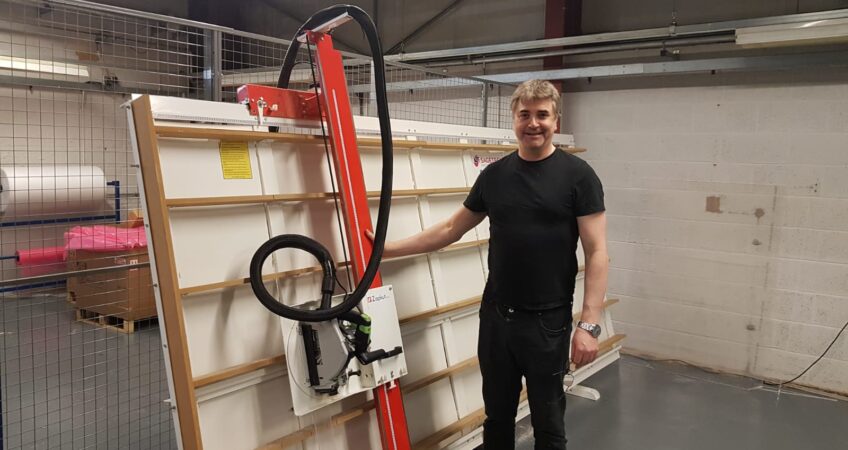
Sky’s the Limit with a Sagetech Machinery Vertical Panel Saw
Company Name: Innerscene Ltd
What do you do?
Innerscene’s artificial skylight sets a new benchmark for virtual skylights around the world. Creating the appearance of sunshine, anytime or anywhere, Innerscene’s award-winning and unique light source offers widespread opportunity, bringing ultra-realistic virtual sky and sun into interior spaces that may not have access to windows. Whether it be an office, educational, or healthcare environment, a visual connection to nature and sunlight is one of the most sought after features of any building. Innerscene’s Virtual Sun provides a captivating view of the sun throughout the day with the optimum amount of sunlight in any space you’d like to illuminate. At night, the virtual skylight provides you with a mesmerising moonlit sky to help you naturally fall asleep in tune with your circadian rhythm. Installed into walls or ceilings, Innerscene’s virtual skylight provides a realistic 3D view of a distant sun or moon and its surrounding sky.
Where did you hear about Sagetech Machinery?
I was looking for a solution for cutting acrylic and perspex sheet material for our lightboxes. I came across an article that mentioned the Zapkut and after a quick google search I found them

Why did you decide to purchase a Vertical Panel Saw?
I wanted to bring in the solution to give us freedom of cutting sheets for orders in house rather than relying on other companies supplying pre-cut sheets. This would allow us to control production much better.
How did you find the sales and installation process?
After a couple of conversations with David and watching videos from the Sagetech YouTube channel I was sold on the machine. From when the order was placed we spoke a few times to arrange delivery and installation. The delivery was quick and the engineer came to install the machine and train our guys on general use and maintenance
How has a Vertical Saw benefited you and your business ?
Its allowed us to save on outsourcing and made us more efficient in production. Having a stock of acrylic and perspex allows us to create the panels that we need on the same day so this allows us to fulfil customer orders quicker and with fewer mistakes than what the outsourcing often brought.
For more information contact us on 0191 6913044 email us at hello@sagetechmachinery.co.uk or visit www.sagetechmachinery.co.uk
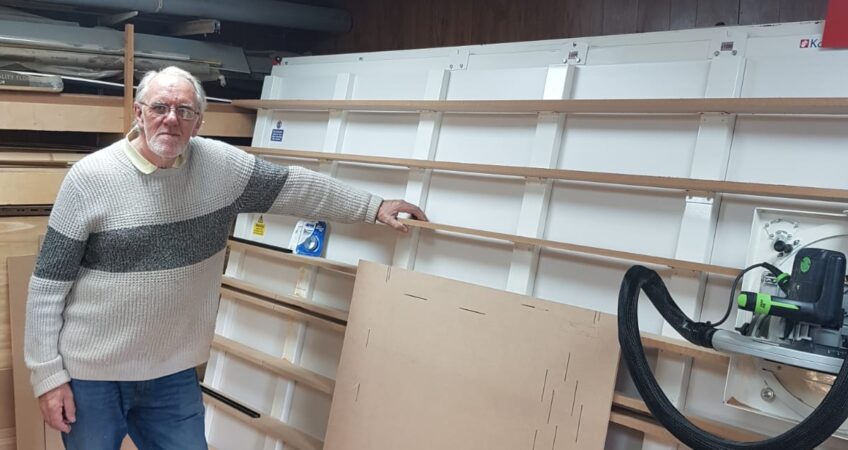
Family business invest in a Vertical Panel Saw
Company Name: Made Just 4U
What do you do?
We are a small local family business with over 20 years’ experience in the furnishing industry. We design and manufacture furniture and bespoke items such as headboards, pelmets, ottoman chests, stools, bench seating etc. We advise and find practical solutions to any design challenge. From exclusive high-end to practical and functional pieces, each item of furniture is custom made to the size and design you wish, using fabric either from our range or supplied by you (subject to its suitability). We pride ourselves on providing a personal service and finishing our work to a very high standard. Our growing number of satisfied returning customers and referrals is testament to this.
Where did you hear about Sagetech Machinery?
I had originally saw Sagetech a few years back, I think around 2018 at the W show at the NEC in Birmingham. I kept track of them for when the time was right for me to invest!

Why did you decide to purchase a Vertical Panel Saw?
I have our workshop situated in an old double garage at the rear of our property which is key to my business. The biggest challenge I had was space as its a low roof but then also floor space – our other machines needed to be still in place to work in connection with the saw.
How did you find the sales and installation process?
The chap I spoke to was great. He really helped identify the right saw but then also found all the measurements of the machine to allow us to check the measurements to make sure it fitted! The guys turned up, brought the machine parts in, built it and then the Sagetech Engineer came to install the saw and gave us training.
How has a Vertical Saw benefited you and your business ?
I wish I did this years before! I’ve moved away from having sheets cut at a local timber yard and the worry about transporting them to me – I just get full sheets and cut it down. The team here love the saw. All our work is bespoke however we are working more efficient than ever before!
For more information contact us on 0191 6913044 email us at hello@sagetechmachinery.co.uk or visit www.sagetechmachinery.co.uk
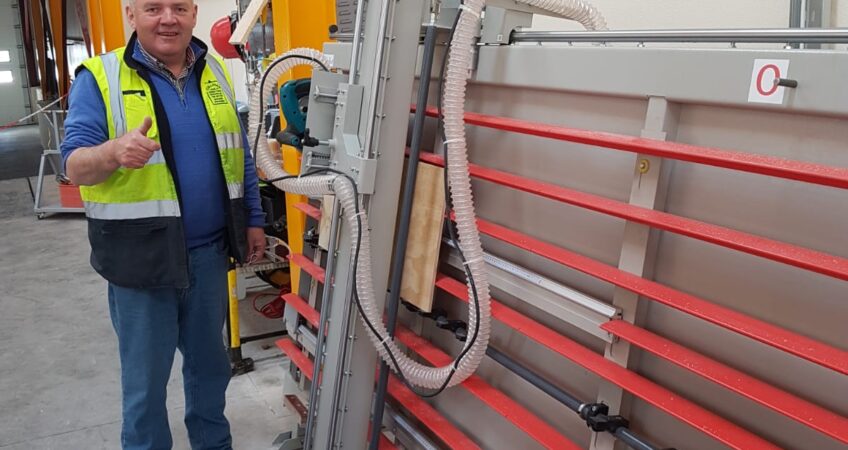
Daktronics take on a Kool new machine!
Case Study and Testimonial Questions
Company Name: Daktronics
What do you do?
Daktronics provide solutions for the transport industry with LEDS – we have become a world leader producing LED displays and we have our displays installed these in over 120 countries
Where did you hear about Sagetech Machinery?
We had been googling for vertical panel saws and came across Sagetech Machinery. Being a UK company who provided full delivery, installation and training as part of the wall saw package was a huge plus for us,
Why did you decide to purchase a Vertical Panel Saw?
We needed a wall saw machine for cutting OSB board to make packaging containers for our displays to be shipped al over the world. Although we have a vast area in our building space is still a premium so the vertical panel saw allowed us to have the machine we need and fit in a small foot printed area. We needed a robust and compact vertical panel saw, but still within budget in the current situation the world was living in with COVID!

How did you find the sales and installation process?
The whole process was so easy. We picked the wall saw and called Sagetech. We spoke about availability then delivery. Given we are in southern west Ireland I thought this might have been a challenge but I was delighted to find out the Sagetech team could supply us with the machine. The delivery happened when it was planned. The engineer was fantastic at talking us through the machine. The training on the wall saw was excellent! It was a whole new process for the team and we needed to make us the correct people had the in depth training they needed on the panel saw.
How has a Vertical Saw benefited you and your business ?
Since investing in an industrial woodworking machine, which the Koolkut wall saw certainly is, we have been able to stop outsourcing our cutting needs – this means no extra costs for cutting needs and our crates can be made same day to order and constructed ready for shipping in no time! They old saying is Time is money – well this Koolkut vertical panel saw machine is saving us a lot of time!
Read more about this on our blog http://www.wallsaws.co.uk/
For more information contact us on 0191 6913044 email us at hello@sagetechmachinery.co.uk or visit www.sagetechmachinery.co.uk
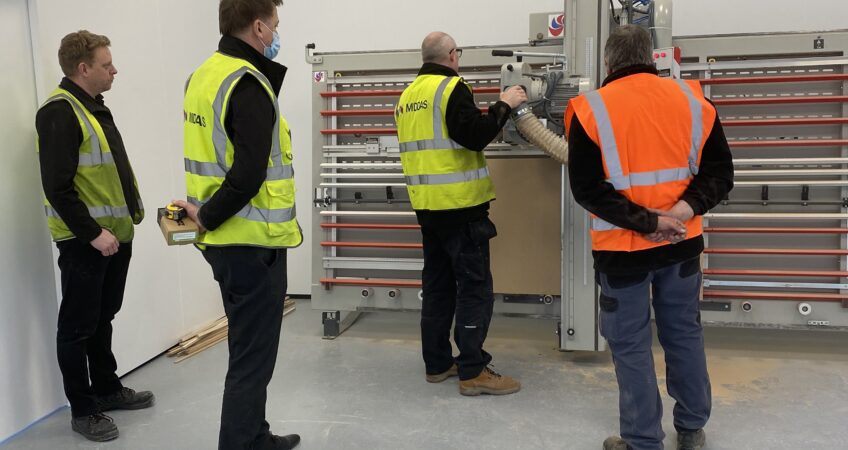
TECHKUT – The perfect cut!
Case Study and Testimonial Questions
Company Name: Middas Interior Solutions Ltd
What do you do?
We are a design and manufacturing company specialising in demountable, performance driven, steel partitioning systems, suspended ceilings, door sets as well as extensive architectural specials and one off designs.
Where did you hear about Sagetech Machinery?
We found Sagetech Machinery through google. We found the website very user friendly which provided lots of videos of the wall saw, case studies and images of the vertical panel saw machine! We liked the idea of the company being UK based who have been manufacturing and building machines for over 30 years!
Why did you decide to purchase a Vertical Panel Saw?
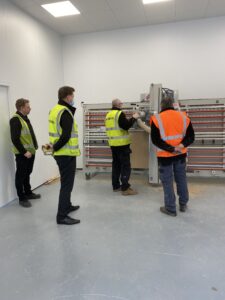
We needed to help our production team in improving their outputs in-terms of volume and efficiency. Before investing in the Techkut vertical panel saw machine our production team were cutting each plasterboard sheet by hand – requiring preparation marking the cut and then after cut cleaning – this also made some of the duct particles become airborne. We wanted the right machine for the job but also the right environment for the machine and our team. We looked at other panel cutting machines, but decided a compact vertical panel saw was the perfect fit for our business.
How did you find the sales and installation process?
The staff at Sagetech were amazing for us – not only did they find out about requirements for the machine they also helped with the area for the wall saw machine and advice on extraction for our materials. The delivery process was smooth and the Sagetech engineer commissioned the machine without disruption to our ongoing production and the training was great. Our production guys instantly fell in love with the machine too!
How has a Vertical Saw benefited you and your business?
Since installation we have seen our production times improve hugely. From cutting sheets by hand to now cutting down large sheet on a perfect vertical panel saw machine is just worlds apart! We have also seen less waste material which happens from a more accurate cut and better finish of cut from our old process. As the machine is contained in its own room this has removed the risk for any airborne particles reaching other production areas and staff too – why didn’t we do this sooner!
Read more about this on our blog http://www.wallsaws.co.uk/
For more information contact us on 0191 6913044 email us at hello@sagetechmachinery.co.uk or visit www.sagetechmachinery.co.uk